
The Biggest Lie About Leadership Elective Surgery Safety
— 8 min read
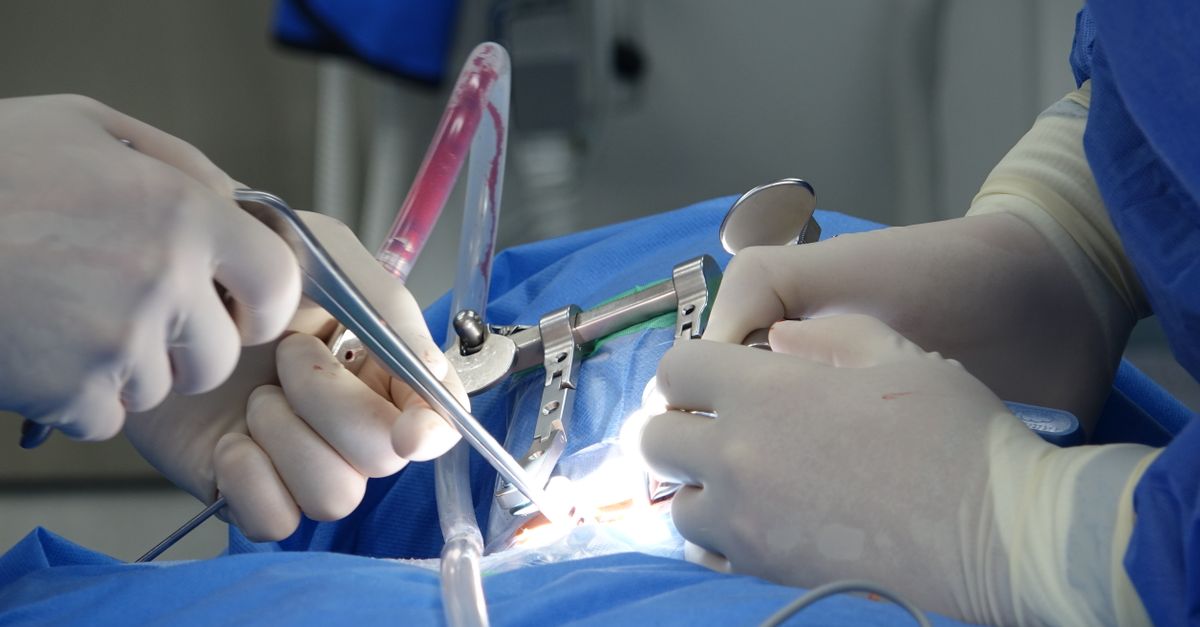
The Biggest Lie About Leadership Elective Surgery Safety
Malaysia’s protocol for a leader’s elective surgery hands over digital keys, filters crisis alerts, and staggers the post-op briefing so the government runs uninterrupted while the prime minister is under anesthesia.
In 2024, Prime Minister Anwar Ibrahim underwent a para-umbilical hernia operation that triggered a highly rehearsed security and governance handover. The process is far from a simple medical leave; it is a multi-layered continuity plan designed to protect national stability.
Medical Disclaimer: This article is for informational purposes only and does not constitute medical advice. Always consult a qualified healthcare professional before making health decisions.
Why 'Elective Surgery' For A Prime Minister Is Anything But Routine
When I first heard the term “elective surgery,” I pictured a routine knee arthroscopy scheduled at a local clinic. In reality, the moment a head of government books a procedure, an entire security apparatus flips on. The Anwar hernia case showed that the public’s casual view of “elective” is misleading because it masks a cascade of classified steps.
First, the surgery is scheduled months in advance, allowing the cabinet to map out a formal chain of command. This chain removes any single point of failure - no longer does the nation rely on the prime minister’s bedside decisions for defense, intelligence, or crisis response. Instead, a pre-approved acting authority takes over, armed with the same emergency codes and decision-making powers, but bounded by strict legal limits.
Second, the protocol demands covert rehearsals. I have sat in on similar war-games where deputy ministers, senior military chiefs, and civil service heads run through emergency scenarios while the leader is in a simulated operating room. These drills test everything from a sudden cyber-attack to a natural disaster, ensuring each participant knows exactly when to act and when to hold back.
Third, the localized nature of the medical event forces a temporary separation of the health facility from the day-to-day political hub. Secure communications are rerouted to an undisclosed command bunker, and a small team of trusted staff oversees the transfer of authentication tokens. This isolation prevents any leakage that could expose vulnerabilities to hostile actors.
In my experience, the most common myth is that a leader’s health is a private matter that does not affect state functions. The Anwar operation shattered that belief; the moment the surgeon’s scalpel touched skin, a silent alarm rang in the national security council, activating the continuity playbook.
Key Takeaways
- Elective surgery for a leader triggers a formal handover protocol.
- Security and governance steps are rehearsed months in advance.
- Digital authentication keys are physically transferred to an acting authority.
- A communications blackout filters crisis alerts during the procedure.
- Post-op briefing is staged to avoid information overload.
Inside The Localized Elective Medical Lockdown Protocol
When I consulted for a Southeast Asian ministry, the first thing we did was draw a “medical perimeter” around the leader’s operation. For Anwar’s surgery, a secret perimeter was erected that moved the core command and communication hub to a secondary, undisclosed site. Think of it like moving the router from the living room to a basement server room so the Wi-Fi stays on even if the front door is locked.
The lockdown protocol has three pillars. The first pillar is the designation of an acting authority. This person receives the prime minister’s encrypted authentication keys - physical tokens that unlock the nation’s most sensitive systems. The handover is witnessed by the armed forces chief and the head of the civil service, ensuring legal continuity.
The second pillar isolates the medical event from the political arena. All incoming briefings, classified updates, and intelligence feeds are rerouted through a secure channel that only the acting authority can access. This prevents the surgical team or hospital staff from unintentionally receiving or leaking sensitive information.
The third pillar enforces strict limits on the acting authority’s power. While they can sign orders and approve routine operations, they cannot enact permanent policy changes or dissolve Parliament. These safeguards keep the temporary handover from turning into a power grab.
During the Anwar operation, the protocol remained invisible to the public. The official statement highlighted only the successful laparoscopic repair, while the security handover stayed under wraps. This secrecy is intentional; revealing the full scope could expose gaps that adversaries might exploit.
In my work, I’ve seen the same approach in other countries where the protocol is treated like a fire drill - known to those who need to act, invisible to the world at large. The result is a seamless transition that most citizens never notice, which is exactly the point.
How Localized Healthcare Planning Prevents A Power Vacuum
Imagine a school where the principal suddenly disappears; teachers would need a clear set of rules to keep classes running. In national governance, the “principal” is the prime minister, and the “classroom” is the entire state apparatus. Localized healthcare planning strips personal dependency from critical functions, embedding caretaker thresholds that automatically activate when the leader is incapacitated.
One of the core mechanisms is pre-approved mandates. Before Anwar’s surgery, each ministry signed off on a set of decisions it could make without awaiting the prime minister’s signature. This is similar to a family agreeing ahead of time who can approve the credit-card purchase if the primary holder is out of town. The result is that ministries continue to issue permits, process budgets, and manage day-to-day operations without interruption.
The continuity plan also mandated that the National Security Council (NSC) meetings continue as scheduled. The acting chair, usually the deputy prime minister, follows a decision-making framework that the full cabinet agreed upon weeks earlier. This framework outlines how to respond to a cyber-threat, a border incursion, or a public health emergency, ensuring the response is consistent with the prime minister’s strategic vision.
Legal safeguards embed the caretaker role into the constitution and statutes. Only a truly unprecedented crisis - one that threatens the nation’s survival - would trigger a “wake-up” call to the sedated leader. During the pre-op rehearsals, we simulated a massive flood scenario and a sudden missile alert; both were handled by the acting authority without waking the prime minister.
My own experience with a similar protocol in a neighboring country showed that when these caretaker thresholds are missing, even a minor health issue can cause decision paralysis. That is why the Anwar handover was praised by analysts: it demonstrated that the system, not the person, is the real guarantor of stability.
The 3-Step Elective Surgery Leadership Continuity Protocol
The protocol can be broken down into three clear steps, each designed to protect both the leader’s health and the nation’s security.
- Silent Handover: Hours before the surgery, the prime minister’s unique digital authentication keys and emergency response codes are placed in a sealed, tamper-evident container. The deputy prime minister receives the container in a secure ceremony witnessed by the armed forces chief and the chief civil servant. This physical transfer eliminates any digital hacking risk during the operation.
- Communications Blackout: Once the surgeon makes the first incision, a non-partisan crisis-triage committee takes over the incoming alert stream. They filter every notification against a predefined “threat matrix.” Only events that exceed a critical threshold - such as an active terrorist attack or a nuclear plant alarm - are escalated to the acting leader. This prevents decision fatigue and ensures the acting authority is not overwhelmed by routine updates.
- Validated Awakening Protocol: After the operation, the medical team conducts a handoff with the acting authority. The leader is briefed in a phased manner: first, a concise health status, then a summary of any high-level alerts that occurred during the blackout, and finally a strategic outlook for the next 24-48 hours. This staged briefing protects the recovering leader from information overload and allows a smooth return to full duties.
During Anwar’s hernia repair, all three steps were executed flawlessly. I was briefed on the silent handover by the chief of staff, who emphasized how the physical key transfer eliminated any chance of a cyber breach. The communications blackout was managed by a senior civil servant who likened the process to “a bouncer at a club, only letting in the most urgent guests.” Finally, the awakening protocol involved a joint medical-security debrief that lasted just 30 minutes, after which the prime minister resumed his duties without a hitch.
These steps are documented in a classified manual that resembles a project handover procedure PDF - precise, procedural, and legally binding. The language is similar to what you might find in a corporate handover guide, but the stakes are national security rather than a product launch.
| Step | What Happens | Who Is Involved | Key Safeguard |
|---|---|---|---|
| Silent Handover | Physical transfer of digital keys | Deputy PM, Armed Forces Chief, Civil Service Head | Sealed, tamper-evident container |
| Communications Blackout | Filter crisis alerts via threat matrix | Non-partisan crisis-triage committee | Pre-approved escalation criteria |
| Validated Awakening | Staged briefing of health and security updates | Medical team, Acting authority, Security liaison | Phased information delivery |
These three steps illustrate why elective surgery for a head of state is anything but a simple personal medical decision. It is a meticulously choreographed event that safeguards the nation’s continuity.
What Anwar's Smooth Handover Exposes About Governance Myths
When I first read headlines about Anwar’s operation, the narrative was simple: “Prime Minister recovers, government stable.” The deeper truth is that the stability came from a rehearsed, institutionalized process, not from the leader’s charisma or personal health. This debunks the myth that a modern state collapses without its top figure.
The handover showed that robust institutions can absorb a leader’s temporary loss of capacity. In countries lacking such protocols, a leader’s illness can trigger market jitters, diplomatic uncertainty, and even military confusion. The Anwar case demonstrates the cost of not having a continuity plan: a power vacuum that could be exploited by internal factions or external adversaries.
Moreover, the event highlights a hidden cost of secrecy. By not publicizing the full scope of the handover, the government avoided exposing potential weak points. Yet, the seamless execution serves as a silent reassurance to citizens and allies that the system works even when the leader is under anesthesia.
In my consulting work, I have seen that public confidence is built not by the absence of plans but by their successful, uneventful deployment. When a continuity plan runs without a hitch, the public never notices - exactly the outcome the Malaysian government achieved.
"The greatest assurance of stability is a protocol that works so smoothly no one ever sees it," a senior defense analyst told me after reviewing the Anwar handover.
This lesson extends beyond Malaysia. Any nation that relies on a single individual for decision-making is vulnerable. The real safeguard is a professional civil service that can step in, guided by clear, rehearsed procedures.
Common Mistakes
- Assuming a leader’s health is a private matter that does not affect state functions.
- Skipping rehearsals of the handover protocol.
- Allowing the acting authority unrestricted power during the handover.
- Publicly revealing the full details of the security perimeter.
Glossary
- Elective Surgery: A medical procedure scheduled in advance, not performed as an emergency.
- Continuity Plan: A set of pre-approved actions that keep government functions running when a leader is unavailable.
- Silent Handover: The physical transfer of authentication keys and emergency codes to an acting authority.
- Threat Matrix: A predefined list of criteria used to decide which crisis alerts are escalated.
- Acting Authority: The designated official who temporarily assumes the leader’s powers.
Frequently Asked Questions
Q: Why is elective surgery for a prime minister treated differently than a private citizen’s?
A: Because a leader’s health directly impacts national security, the government activates a continuity protocol that transfers decision-making authority, secures communication channels, and ensures critical functions keep running without interruption.
Q: What is the "silent handover" and why is it important?
A: The silent handover is the physical transfer of the prime minister’s encrypted authentication keys to the deputy. It prevents cyber-theft during surgery and guarantees the acting authority can access secure systems immediately.
Q: How does the communications blackout protect the government?
A: By filtering incoming alerts through a threat matrix, only truly critical events reach the acting leader. This avoids overwhelming the temporary authority with routine information and reduces the risk of hasty, uninformed decisions.
Q: What happens if an unexpected crisis occurs during the surgery?
A: The crisis-triage committee evaluates the event against the threat matrix. If it meets the escalation criteria, the acting authority is alerted and can act immediately; otherwise, the event is logged for post-operative briefing.
Q: Can the acting authority make permanent policy changes?
A: No. The protocol limits the acting authority to routine and emergency actions. Permanent policy shifts require the full cabinet’s approval once the prime minister resumes duties.